The Solution
Campaigns that move the market.
You set the offer, pricing, or promotion. Palli engages the market. You measure the impact.
Connecting Africa’s Last Mile
hello@pallitech.com
The Problem
Up to 72% of trade promotions lose money.
Campaigns travel the last mile on trucks, handed depot to agent to shop. Some of the offer never arrives. What arrives can’t be traced.
What can’t be measured can’t be improved.
McKinsey & Company, “How analytics can drive growth in CPG trade promotions” (2019).
The Solution
You set the offer, pricing, or promotion. Palli engages the market. You measure the impact.
How it works
Nothing changes about the route-to-market except how offers reach each layer.
Case study
For one month, volume discounts went direct to delivery agents, for onboarding and fulfilment, and direct to local retailers. Fixed amount per carton, no pass-through at the depot.
We wanted to know whether incentives paid direct would drive onboarding, throughput, and performance we could measure.
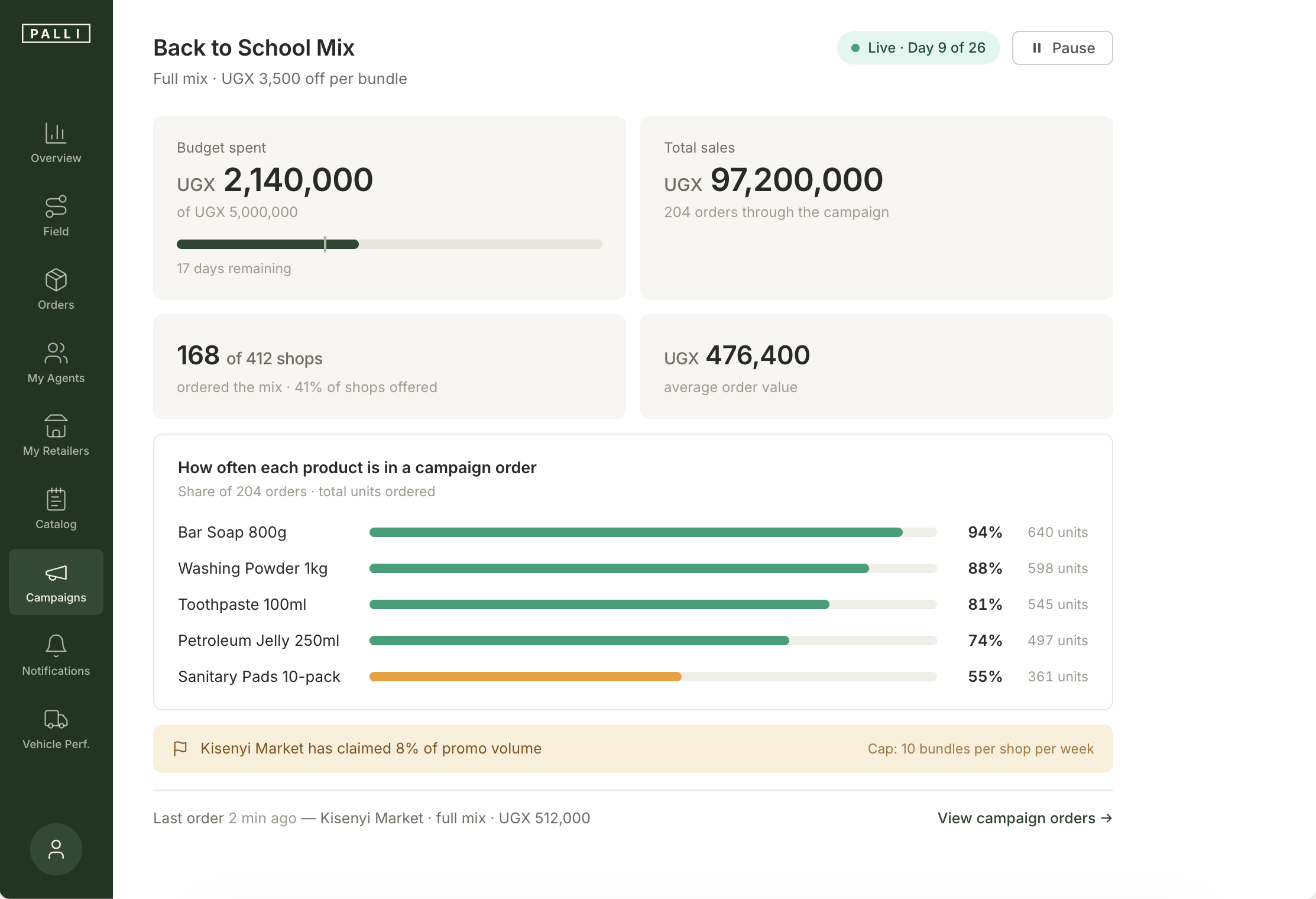
Every UGX 200 of promotion moved UGX 17,000 of orders. 2x the throughput.
paid out in incentives
in orders through the campaign
placed 301 orders
Every order carried the customer, the products, and the delivery with it.
Business model
We deploy trade spend with precision and impact.
| Enterprise manufacturer | Local brand | |
|---|---|---|
| Annual revenue | $50M | $1M |
| Marketing and discount spend | $5,000,000 | $20,000 |
| Addressable through Palli | $1,250,000 | $10,000 |
| Take rate | 20% | 20% |
| Annual value to Palli | $250,000 | $2,000 |
We earn when customers get paid.
The market
| Uganda | East Africa | With consumer marketing | |
|---|---|---|---|
| Local brands and manufacturers | 2,000 | ~10,000 | ~10,000 |
| Enterprise brands and manufacturers | 25 | ~125 | ~125 |
| Addressable spend | $40M | $200M | $400M |
| Take rate | 20% | 20% | 20% |
| Annual value to Palli | $8M | $40M | $80M |
We start with trade spend because it is the budget already trying to reach the shop.
Our journey
$400K issued and returned to local wholesalers. We financed businesses we could not see.
Money alone tells you nothing$200K/month in daily transactions. We saw the cash and still not the trade behind it.
A payment is not an order$700K/month with regional distributors. Running distribution ourselves produced volume, not information.
Owning the goods is the wrong lever100+ daily transactions per route. First record of what moved and where, but nobody was paying for the record.
Coordination needs a reason to existIncentives paid direct to agents and retailers. Every claim arrived as an order with a customer, a product, and a delivery attached.
The promotion is what makes the transaction visibleWe set out to create value where value is already concentrated, making that spend productive. Managing it is also what reveals the last mile.
The team
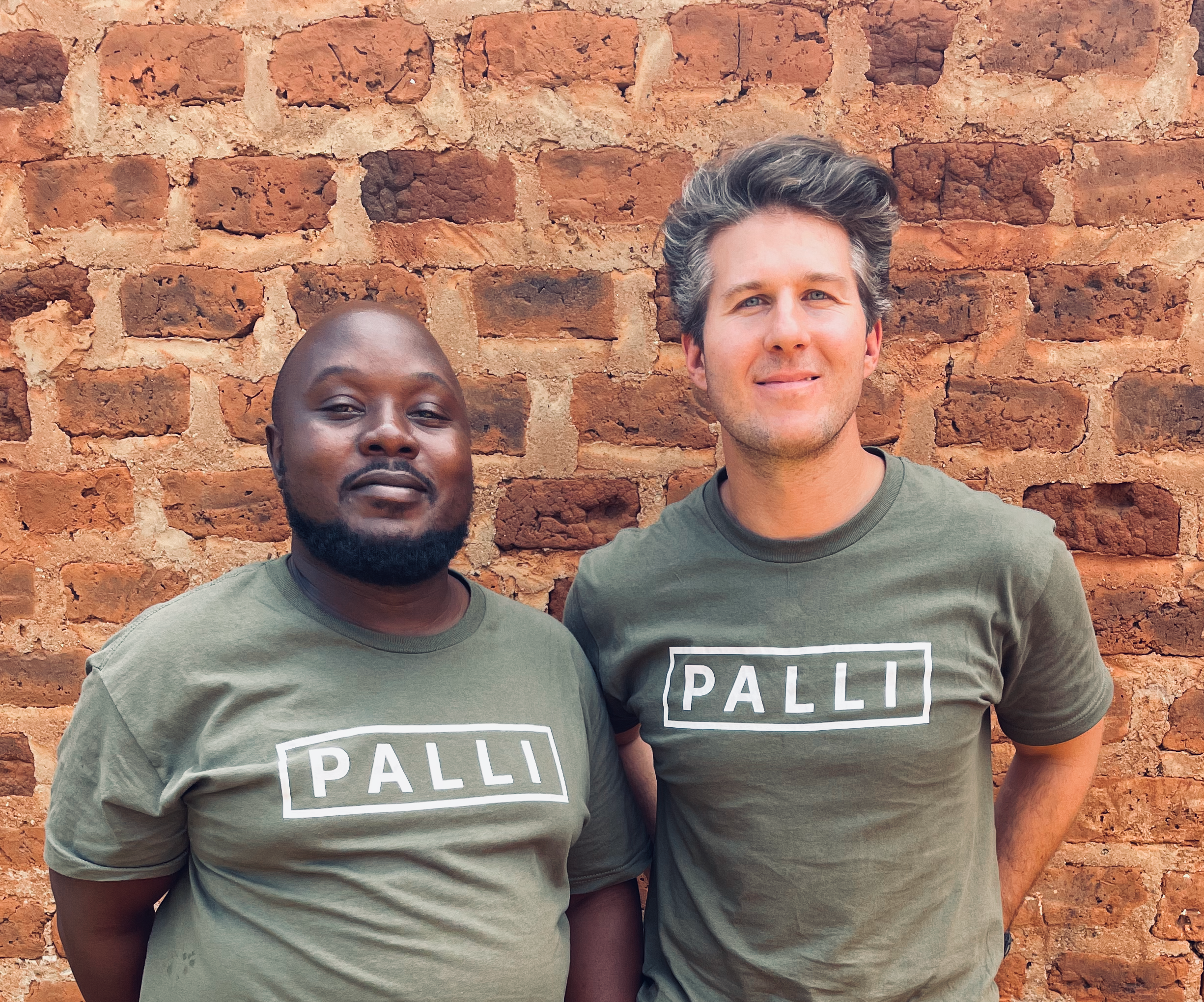
CEO
10 years with small business owners across Africa. Head of Product, Navio. First software PM, Counsyl (acq. Myriad). Founder, Axena ($1M+ revenue, Asia Pacific).
CTO
Built a savings co-op with $1M+ in assets. Head of Systems Engineering, PSI. Founder, Nymbow Uganda.

Isabel
Customer Success

Francis
Software Engineering

Noble
Software Engineering

Ken
Software Engineering

Jon
Product & Engineering

Noah
Operations

Ken
Field Sales
The ask
Sales and marketing directors who own trade spend.
Local and enterprise brands that reach market demand through last-mile networks.
hello@pallitech.com·+256 765 804 581·pallitech.com
Appendix
Automated engagement
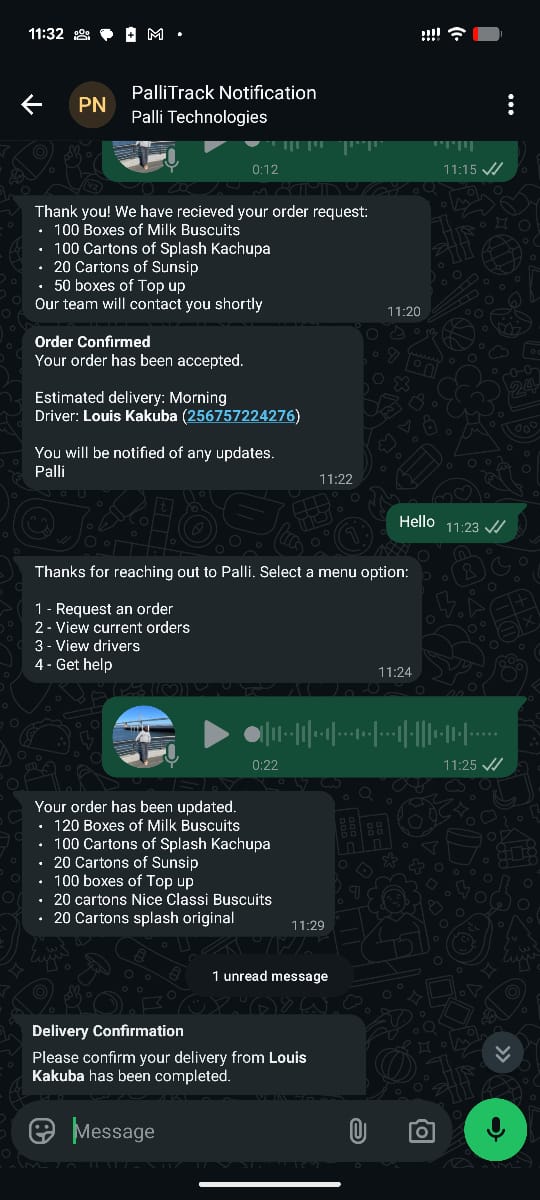
Palli talks with every customer. Voice, photos, local language, matched to your campaign and catalogue, confirmed as complete orders.
Direct rebate
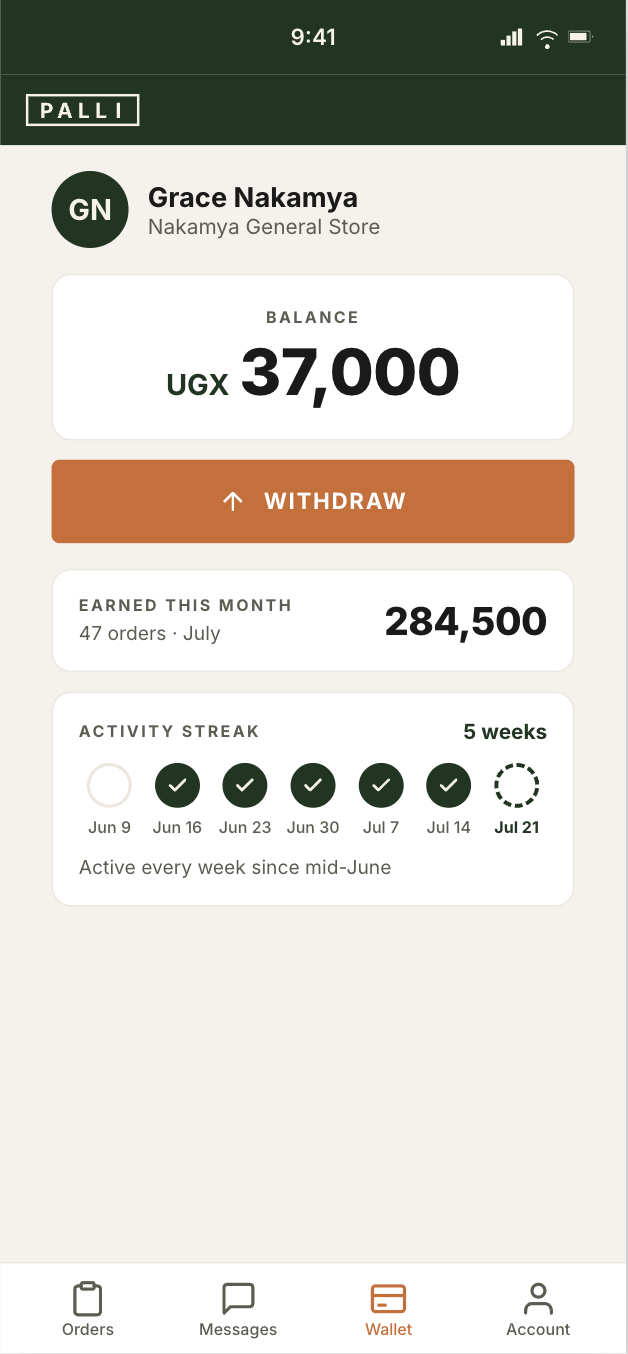
Reimbursement goes direct to customers, only after delivery is confirmed. Promotions can be expanded to include agents and depots.
Measure
Budget, orders, and uptake, live. Measure impact as campaigns run.
One order
Our fee comes out of the budget rather than sitting on top of it.
| UGX | USD | |
|---|---|---|
| Order value | 500,000 | $135 |
| Budget deployed | 10,000 | $2.70 |
| Discount reaching the retailer | 8,000 | $2.16 |
| Palli earns | 2,000 | $0.54 |
| Cost to serve | 149 | $0.04 |
| Margin | 1,851 | $0.50 |
Messaging, AI, cloud, and payment rails are the whole cost of serving an order. That is a 93% margin.
Round numbers. The model deploys 2.5% of order value rather than the 2.0% shown, so these figures illustrate the mechanic rather than tie to the model.
The Defensible Asset
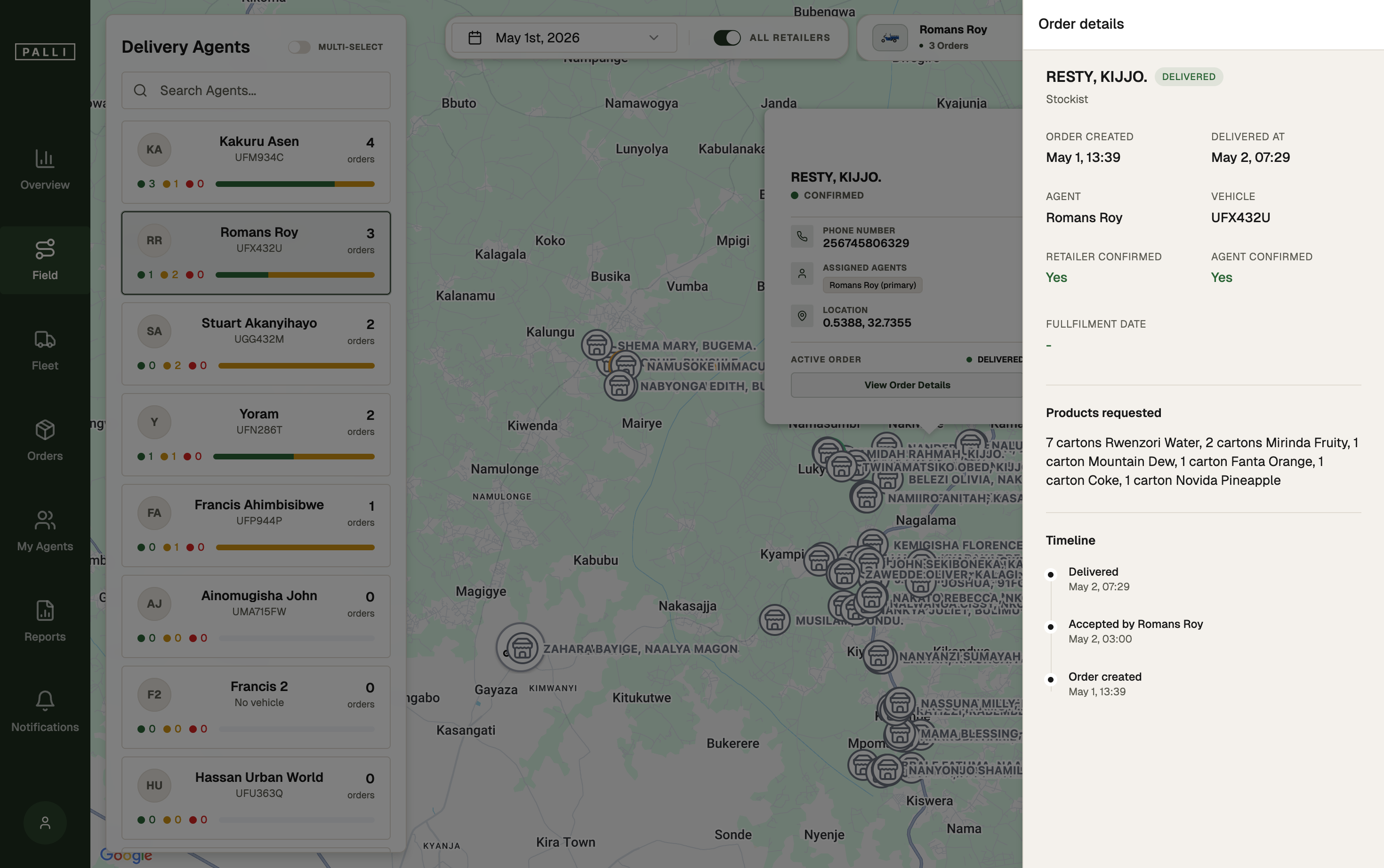
Google has roads. Palli knows what moves on them.
The Graveyard
Shut down 2024. Absorbed margin risk in commodity distribution. As volume scaled, unit economics collapsed.
Owned the farms, warehouses, fleet. Every asset became a target. Every failure hit the balance sheet. Restructuring.
Shut down 2024. Owned warehouses, fleet, 50,000 agents. Liquidated after failing to reach profitability at scale.
Each one bought the network. Coordination doesn’t require owning it.